
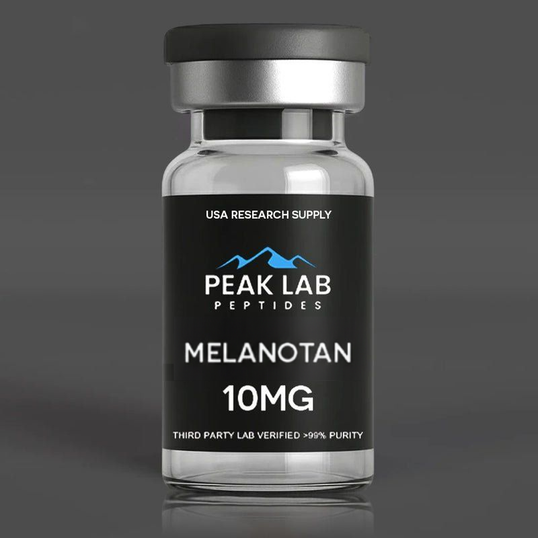
Melanotan I

$49.00 Original price was: $49.00.$39.00Current price is: $39.00.
In stock
In stock
Become a Member and save 20% on Every Order.
Description
Melanotan I (MT-1)
MT-1 (Melanotan I) – 10mg (Lyophilized Peptide) – For Research Use Only
Melanotan I (MT-1) is a synthetic analog of the alpha-melanocyte-stimulating hormone (α-MSH),studied for its ability to selectively activate melanocortin-1 (MC1R) receptors, which play a central role in skin pigmentation and melanogenesis.
Research has focused on MT-1’s role in melanin production, UV-induced skin response, and photoprotective mechanisms in laboratory models.
Product Details:
Peptide: Melanotan I (MT-1)
Purity: >98%
Form: Lyophilized powder
Quantity: 10mg per vial
Storage: Store at -4°F (-20°C). After reconstitution, refrigerate at 36–46°F (2–8°C) and use within 30 days.
Grade: For research purposes only. Not for human consumption, therapeutic, or diagnostic use.
Potential Research Applications:
Melanogenesis and eumelanin production studies
UV-response and photoprotection research models
Skin pigmentation and MC1R receptor signaling investigations
Dermatological and pigmentation pathway research
For laboratory research only. This product is not intended to diagnose, treat, cure, or prevent any disease.
THIS IS NOT FOR HUMAN CONSUMPTION. SOLD FOR RESEARCH ONLY!
Melanotan 1 (MT1) is a synthetic linear analog of alpha-melanocyte-stimulating hormone (α-MSH) with the peptide sequence Ac-Ser-Tyr-Ser-Met-Glu-His-Phe-Arg-Trp-Gly-Lys-Pro-Val-NH₂. It is engineered for targeted activation of melanocortin receptors—especially MC1R—making it a valuable research tool for studying pigmentation pathways, GPCR signaling, and transcriptional regulation.
In preclinical settings, Melanotan 1 activates cAMP-dependent second-messenger systems, leading to modulation of genes involved in melanin production and cellular photoprotection. This 10mg lyophilized peptide is strictly intended for laboratory use in receptor pharmacology, melanocyte signaling, and comparative ligand analysis models.
- Peptide Class: α-MSH analog (linear)
- Sequence: Ac-Ser-Tyr-Ser-Met-Glu-His-Phe-Arg-Trp-Gly-Lys-Pro-Val-NH₂
- Primary Targets: MC1R (primary), MC3R, MC4R, MC5R (secondary)
- Mechanism of Action: GPCR agonist; cAMP/PKA signaling cascade activator
- Applications: Pigmentation studies, neuroendocrine research, energy metabolism models
- Format: Lyophilized powder, 10mg per vial
- Purity: ≥99% (HPLC-verified)
- Research Use Only: Not for human or veterinary use
- Melanocortin Receptor Pharmacology
Used in in-vitro cell assays to measure receptor binding and activation across melanocortin receptor subtypes. MT1 supports receptor selectivity comparisons and is frequently paired with signaling reporters like cAMP and PKA-activated transcription factors. - Pigmentation Biology and Melanocyte Models
MT1 is ideal for studying MC1R-mediated melanin production. Research focuses on transcriptional activation of melanogenesis enzymes (e.g., tyrosinase) and analysis of melanosome formation and function in cultured melanocytes. - Neuroendocrine and Neuroimmune Signaling
Research involving CNS tissues or rodent models uses MT1 to examine neurotrophic gene expression, BDNF regulation, and receptor-linked plasticity pathways. MT1 also serves as a tool in inflammation-linked neurobiology research. - Cardiovascular and Autonomic Regulation
In preclinical cardiovascular studies, Melanotan 1 has been used to assess its impact on autonomic balance, blood pressure regulation, and endothelial function via MC receptor signaling. - Energy Metabolism and Metabolic Pathway Probing
Due to MC4R’s role in energy homeostasis, MT1 is used in animal studies to assess receptor-linked regulation of lipid metabolism, substrate oxidation, and body-weight regulation under experimental diets or stressors.
Q: What is Melanotan 1 used for in research?
A: It’s primarily used to study melanocortin receptor activity, pigmentation pathways, neuroendocrine signaling, and energy metabolism in preclinical models.
Q: How is MT1 different from MT2?
A: Melanotan 1 is a linear analog with a higher selectivity toward MC1R, while MT2 is cyclic and binds more broadly to MC1R–MC5R with behavioral and metabolic overlap.
Q: Can MT1 be used for tanning or cosmetic purposes?
A: No. This peptide is strictly intended for laboratory research and is not approved for human use or cosmetic application.
Q: What pathways does MT1 influence?
A: MT1 activates the cAMP/PKA signaling axis, influences transcriptional responses linked to pigmentation, and can modulate neuroimmune and metabolic signaling in receptor-specific models.
Q: What storage conditions are recommended?
A: Store the lyophilized peptide at -20°C. After reconstitution with bacteriostatic water, it should be used promptly or stored under sterile refrigerated conditions and used within a few days.
Storage & Handling
All peptides are supplied as sterile, lyophilized powder and are stable when handled correctly.
- On arrival: Store vials in a cool, dry place away from heat and direct sunlight.
- Long-term (powder): For optimal longevity, keep lyophilized peptides refrigerated to help maintain integrity.
- After reconstitution: Use an appropriate research diluent (for example, BAC water). Store the reconstituted solution in the refrigerator and use within 20–30 days for best stability.
Note: Minimize exposure to moisture and repeated freeze–thaw cycles. Follow your institution's safety procedures when handling research materials.
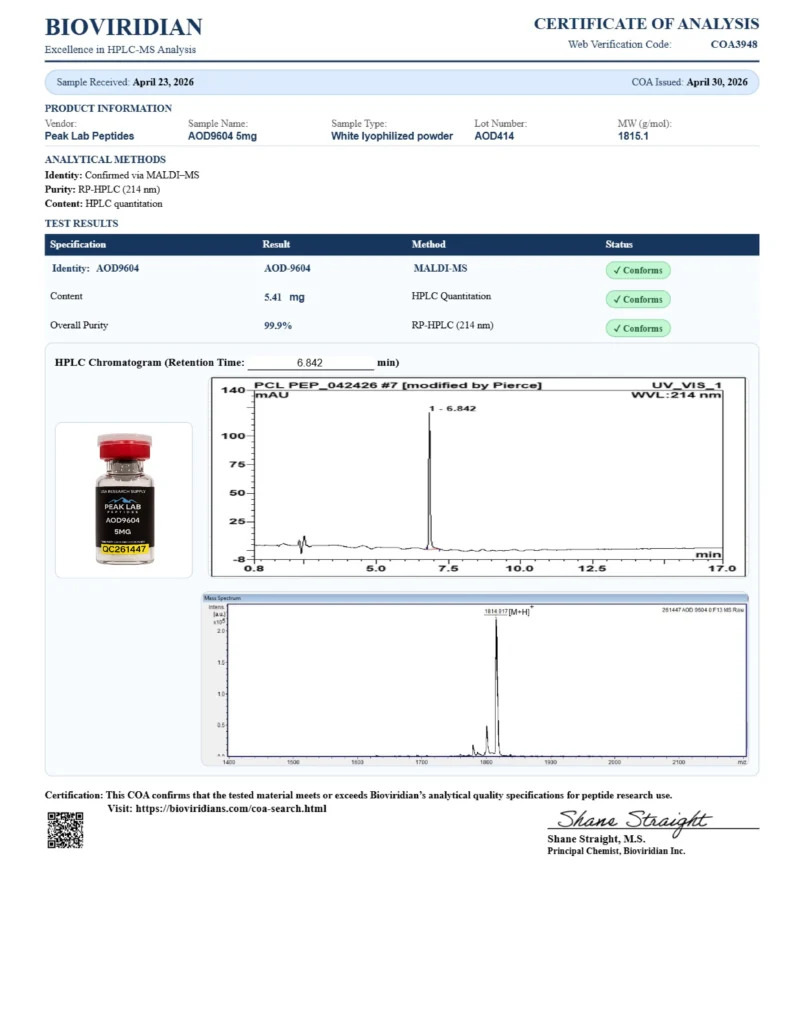
Peak Lab Peptides maintains quality-control processes and routinely performs third-party testing to support purity and identity verification. COAs are available upon request for applicable batches. Documentation may vary depending on production timelines.
We aim to make batch-level documentation available whenever possible. Our goal is to expand COA access across the full catalog as production capacity grows.
All products are for laboratory research use only and are not intended for human consumption.
Related Products

Acetic Acid 0.6%
Acetic Acid 0.6% – 10ml (Sterile Solution) – For Laboratory Use Only
Acetic Acid 0.6% is a sterile, aqueous solution commonly used in research and lab settings for pH adjustment, buffer preparation, and preservative applications. Its mild acidic properties make it suitable for studies involving topical antimicrobial effects, cellular environment modification, and reagent preparation.This solution is intended for controlled research environments requiring low-concentration acetic acid in a sterile, injectable-grade format.Product Details:
Compound: Acetic Acid 0.6% in sterile waterVolume: 10ml multi-dose vialForm: Sterile solutionConcentration: 0.6% w/vStorage: Store at 68–77°F (20–25°C); protect from light and contaminationGrade: For laboratory research only. Not for human or animal use in therapeutic or diagnostic procedures.Potential Research Applications:
pH regulation and buffer system studiesTopical antimicrobial and cytotoxicity researchReagent dilution and formulation preparationLaboratory protocol requiring acidic conditionsFor laboratory use only. This product is not intended to diagnose, treat, cure, or prevent any disease.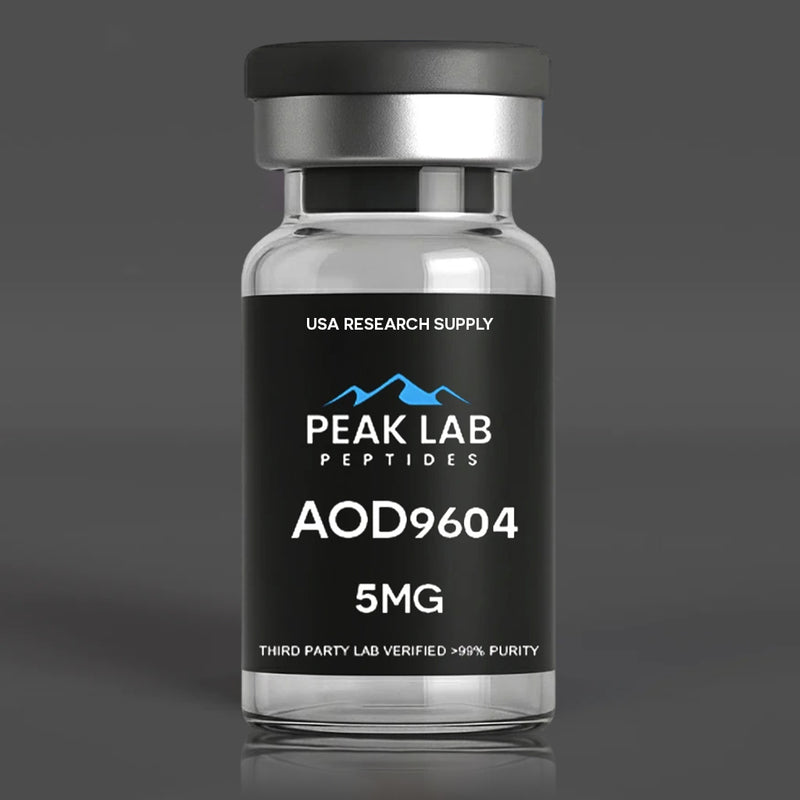
AOD9604
AOD9604
AOD-9604 – 5mg (Lyophilized Peptide) – For Research Use Only
AOD-9604 is a modified fragment of human growth hormone (HGH), specifically amino acids 176–191, developed for its potential role in fat metabolism and lipolysis research. Unlike full-sequence HGH, AOD-9604 is studied for its ability to promote fat breakdown without influencing blood sugar or IGF-1 levels, making it a focus of metabolic and weight management studies.
Research has explored its effects on adipose tissue, body composition, and metabolic rate regulation.
Product Details:
Peptide: AOD-9604 (HGH Fragment 176–191)
Purity: >98%
Form: Lyophilized powder
Quantity: 5mg per vial
Storage: Store at -4°F (-20°C). After reconstitution, refrigerate at 36–46°F (2–8°C) and use within 30 days.
Grade: For research purposes only. Not for human consumption, therapeutic, or diagnostic use.
Potential Research Applications:
Fat metabolism and lipolysis studies
Obesity and weight management research models
Adipose tissue regulation investigations
Metabolic health and energy balance research


BPC-157
BPC-157
BPC-157 (Body Protection Compound 157) is a synthetic pentadecapeptide studied in preclinical models for its roles in tissue repair signaling, angiogenesis, nitric oxide modulation, and gastrointestinal mucosal research. Supplied as lyophilized powder at 99%+ HPLC verified purity. Batch-specific COA included. For in vitro research use only.
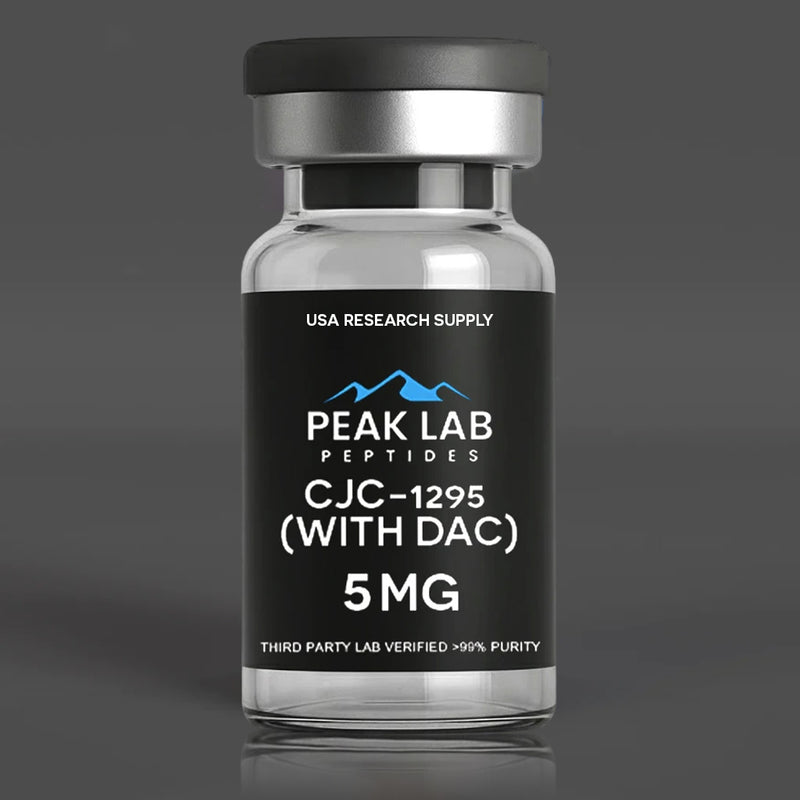
CJC-1295 with DAC
CJC-1295 with DAC
CJC-1295 with DAC – 5mg (Lyophilized Peptide) – For Research Use Only
CJC-1295 with DAC (Drug Affinity Complex) is a long-acting analog of Growth Hormone-Releasing Hormone (GHRH), designed to promote sustained release of growth hormone (GH) in research models. The DAC modification significantly extends its half-life, allowing for prolonged activity and making it ideal for studies on muscle growth, recovery, anti-aging, and fat metabolism.
CJC-1295 with DAC is often paired in research with peptides like Ipamorelin for synergistic GH axis stimulation.
Product Details:
Peptide: CJC-1295 with DAC
Purity: >98%
Form: Lyophilized powder
Quantity: 5mg per vial
Storage: Store at -4°F (-20°C). After reconstitution, refrigerate at 36–46°F (2–8°C) and use within 30 days.
Grade: For research purposes only. Not for human consumption, therapeutic, or diagnostic use.
Potential Research Applications:
Sustained growth hormone release studies
Muscle growth, recovery, and anti-aging research models
Fat metabolism and body composition investigations
Long-acting GHRH analog research
For laboratory research only. This product is not intended to diagnose, treat, cure, or prevent any disease.

GHK-Cu

GLOW Blend 70mg (GHK-Cu 50mg, BPC-157 10mg, TB-500 10mg)
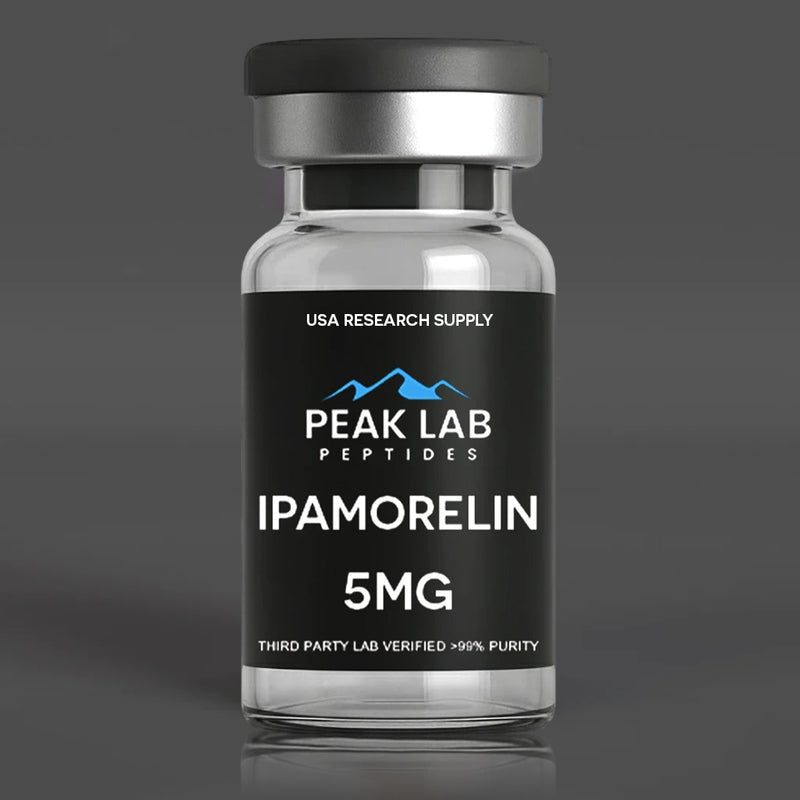

Ipamorelin
Ipamorelin
Ipamorelin – 5mg (Lyophilized Peptide) – For Research Use Only
Ipamorelin is a selective Growth Hormone Secretagogue (GHS) studied for its ability to stimulate natural growth hormone (GH) release without significantly affecting cortisol or prolactin levels. Known for its clean safety profile in research models, Ipamorelin is commonly explored in studies on muscle growth, recovery, fat metabolism, and anti-aging.
Ipamorelin is often paired in research with other GH-releasing peptides like CJC-1295 No DAC for synergistic effects.
Product Details:
Peptide: Ipamorelin
Purity: >98%
Form: Lyophilized powder
Quantity: 5mg per vial
Storage: Store at -4°F (-20°C). After reconstitution, refrigerate at 36–46°F (2–8°C) and use within 30 days.
Grade: For research purposes only. Not for human consumption, therapeutic, or diagnostic use.
Potential Research Applications:
Growth hormone secretion and endocrine studies
Muscle growth, recovery, and anti-aging research models
Fat metabolism and body composition studies
GH axis and pituitary function investigations
For laboratory research only. This product is not intended to diagnose, treat, cure, or prevent any disease.

KissPeptin-10
Kisspeptin-10
Kisspeptin-10 – 10mg (Lyophilized Peptide) – For Research Use Only
Kisspeptin-10 is a short-chain peptide fragment of the kisspeptin family, known for its regulatory role in the hypothalamic-pituitary-gonadal (HPG) axis. It is widely studied for its potential to influence GnRH (Gonadotropin-Releasing Hormone) secretion, making it a key subject in research on fertility, reproductive hormone modulation, and endocrine function.
Kisspeptin-10 has also been explored in studies related to puberty onset, reproductive health, and hormone signaling pathways.
Product Details:
Peptide: Kisspeptin-10 (Metastin 10 fragment)
Purity: >98%
Form: Lyophilized powder
Quantity: 10mg per vial
Storage: Store at -4°F (-20°C). After reconstitution, refrigerate at 36–46°F (2–8°C) and use within 30 days.
Grade: For research purposes only. Not for human consumption, therapeutic, or diagnostic use.
Potential Research Applications:
Fertility and reproductive hormone studies
HPG axis and GnRH secretion models
Endocrine signaling and modulation research
Studies on puberty and reproductive health
For laboratory research only. This product is not intended to diagnose, treat, cure, or prevent any disease.


MOTS-c
MOTS-c
MOTS-c – 10mg (Lyophilized Peptide) – For Research Use Only
MOTS-c is a mitochondrial-derived peptide (MDP) encoded by the mitochondrial genome, widely studied for its potential role in metabolic regulation, energy homeostasis, and cellular protection. Research has focused on its ability to influence glucose metabolism, insulin sensitivity, and mitochondrial function, making it a key subject in studies on metabolic health and aging.
MOTS-c is of special interest in research exploring exercise mimetic effects, fat metabolism, and metabolic syndrome models.
Product Details:
Peptide: MOTS-c (Mitochondrial Open Reading Frame of the 12S rRNA-c)
Purity: >98%
Form: Lyophilized powder
Quantity: 10mg per vial
Storage: Store at -4°F (-20°C). After reconstitution, refrigerate at 36–46°F (2–8°C) and use within 30 days.
Grade: For research purposes only. Not for human consumption or therapeutic applications.
Potential Research Applications:
Glucose metabolism and insulin sensitivity studies
Mitochondrial function and energy regulation research
Aging, longevity, and metabolic health models
Exercise mimetic and fat metabolism investigations
For laboratory research use only. This product is not intended to diagnose, treat, cure, or prevent any disease.


Selank 10/11mg
Selank
Selank – 11mg (Lyophilized Peptide) – For Research Use Only
Selank is a synthetic peptide analog of the naturally occurring tetrapeptide Tuftsin, extensively studied for its potential nootropic, anxiolytic, and immunomodulatory properties. Research suggests that Selank may support cognitive function, anxiety reduction, and immune system regulation through its interaction with neurotransmitter systems, particularly GABA and serotonin pathways.
Product Details:
Peptide: Selank (Tuftsin analog)
Purity: >98%
Form: Lyophilized powder
Quantity: 11mg per vial
Storage: Store at -4°F (-20°C). After reconstitution, refrigerate at 36–46°F (2–8°C) and use within 30 days.
Grade: For research purposes only. Not for human consumption, therapeutic, or diagnostic use.
Potential Research Applications:
Nootropic and cognitive function studies
Anxiolytic and mood regulation research
Immune modulation and cytokine balance exploration
Neurotransmitter activity and brain health models
For laboratory research only. This product is not intended to diagnose, treat, cure, or prevent any disease.
Reviews
There are no reviews yet.